Tankless water heaters come with a strong reputation. But a strong reputation isn’t the same as the right fit for every home.
In Birmingham, where older established neighborhoods sit alongside newer suburban construction, existing plumbing and gas line infrastructure can vary significantly from one home to the next. That variation makes the decision to go tankless more situational than the marketing suggests. It’s a significant investment, and one that comes with real trade-offs that don’t always get equal attention alongside the benefits.
Before committing to a system that changes more than just the unit, it’s worth understanding exactly what you’re getting into. This guide covers both sides honestly, so you can make the call based on your home’s actual conditions, not just the pitch.
The Real Advantages of Going Tankless
Tankless water heaters offer real benefits. The key is understanding how those benefits translate into daily use inside a Birmingham home.
1. Endless Hot Water Supply
Because water is heated on demand rather than stored in a tank, you do not run out in the traditional sense. Back-to-back showers, laundry running while the dishwasher is on, or a full household getting ready in the morning becomes less of a scheduling issue.
2. Improved Energy Efficiency
Traditional tank heaters continuously reheat stored water to maintain the temperature. That standby heat loss adds up over time. Tankless systems heat water only when you use it, which can reduce energy consumption, especially in households with consistent demand.
3. Longer System Lifespan
A standard tank water heater typically lasts 8 to 12 years. A properly maintained tankless system can often last 15 to 20 years or more. Over time, that extended lifespan can offset part of the higher upfront investment.
4. Space Savings
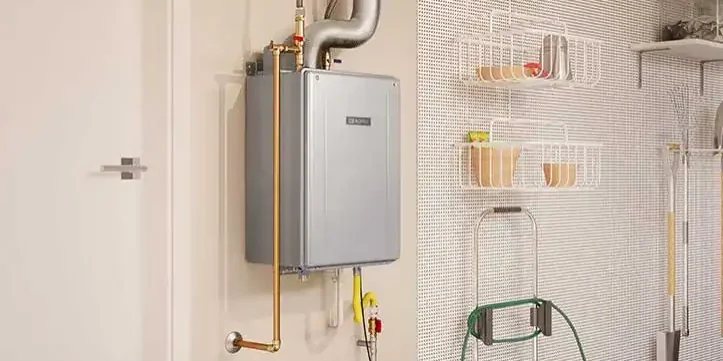
Tankless units are wall-mounted and compact. In many Birmingham homes with utility rooms or basement areas, freeing up floor space can be a practical advantage.
5. Lower Risk of Tank-Related Flooding
A traditional tank stores 40 to 50 gallons of water under pressure. As tanks age, corrosion increases the risk of rupture. Tankless systems eliminate that large stored volume, reducing the risk of sudden water damage from tank failure.
These advantages are real. But whether they justify the investment depends on how well your home’s infrastructure and usage patterns align with the system.
What Most Tankless Comparisons Leave Out
Tankless systems offer meaningful advantages. But the full picture includes tradeoffs that are often glossed over in sales conversations.
1. Higher Upfront Installation Cost
Tankless water heater installation typically costs more than replacing a traditional tank. The unit itself is more expensive, and installation is often more involved. For homeowners comparing immediate replacement costs, this is usually the first major hesitation point.
2. Gas Line or Electrical Upgrades
Many tankless systems require higher gas flow or upgraded electrical capacity. In some Birmingham homes, particularly older ones in established neighborhoods, this can mean modifying the gas line or electrical panel. These upgrades add to the overall project cost and are not always anticipated at the beginning.
3. Performance During Birmingham Winters
Birmingham winters are milder than northern climates, but incoming groundwater temperatures still drop during colder months. That means the system must work harder to raise water to your desired temperature during peak seasonal demand. Proper sizing becomes critical. Correct sizing is based on flow rate and temperature rise calculations, not just household size. An undersized unit may struggle to keep up when demand is highest.
4. Cold Start Delay
Tankless does not mean instant hot water at the faucet. Water still has to travel through your plumbing lines. In larger suburban homes with longer pipe runs, you may still experience a brief delay before hot water reaches the fixture.
5. Annual Maintenance Requirements
Tankless systems require regular flushing to remove mineral buildup. Birmingham’s water supply can carry mineral content that accelerates scale buildup inside the unit. Skipping maintenance can reduce efficiency and shorten the lifespan of the unit. This is different from traditional tank maintenance, and it should be factored into long-term ownership. Routine servicing also helps reduce the likelihood of premature tankless water heater repair.
6. Simultaneous Demand Limitations
Tankless systems are rated by flow rate. If multiple high-demand fixtures are running at once, such as showers, washing machines, and dishwashers, output can be stretched. In larger Birmingham homes with multiple bathrooms, proper sizing or even multiple units may be necessary.
None of these is a deal-breaker. But they are variables that affect whether tankless is a smart upgrade or a costly misfit.
How Birmingham Homes and Climate Affect the Calculation
Two homes with identical tankless units can have very different experiences. The difference is usually not the equipment.
1. Birmingham’s Climate Considerations
Unlike colder northern climates, Birmingham’s winters are generally mild. That means the temperature rise demand on a tankless unit is lower than in states like Indiana or Ohio. However, summer demand can be high, and the region’s humidity means homes are often running multiple water-heavy appliances simultaneously. That simultaneous demand pattern matters more than cold groundwater in this climate.
2. Larger Home Layouts
Many Birmingham homes, particularly in established and newer suburban neighborhoods, are larger with multiple bathrooms and longer pipe runs. Longer distances mean a longer wait for hot water to reach fixtures, even with tankless. High simultaneous demand also becomes more likely in larger households.
3. Existing Gas Line Capacity
Tankless water heater installation often requires a higher gas flow than traditional tanks. In some homes, especially older ones, the existing gas line may not support the new demand without upgrades. That factor can change the overall project cost significantly before installation even begins.
4. Local Utility Rates
Alabama utility rates and usage patterns affect the efficiency payoff timeline. A household with steady, high water demand may see more noticeable efficiency gains than a smaller household with lower usage. The payoff timeline is not universal. It depends on how the system is used.
When these variables are considered together, the decision becomes less about whether tankless is good and more about whether it fits your specific home.
When Tankless Makes Sense and When It Does Not
At this stage, the decision becomes less about features and more about fit. Tankless is not automatically the smarter choice. It depends on your home’s infrastructure, your usage patterns, and how long you plan to stay.
Tankless Makes Sense When
- You plan to remain in the home long-term and want to maximize system lifespan.
- Your household has sustained a high hot water demand, and the unit can be properly sized for it.
- Energy efficiency is a priority over the lowest upfront cost.
- Space is limited in your utility area.
A Traditional Tank May Make More Sense When
- Upfront budget is the primary decision factor.
- Hot water demand is moderate and rarely simultaneous across multiple fixtures.
- Gas line or electrical upgrades would significantly increase the total project cost, or the existing infrastructure does not support conversion without major work.
The right choice is not determined by trend. It is determined by how your specific home is built and how it is used.
Still On the Fence About Tankless Water Heater Installation?
The right answer depends on what’s already in your home, and that’s not something a general pros and cons list can tell you.
Mr. Drippy Plumbing can assess your current plumbing and gas setup, walk you through what installation would actually involve for your specific home, and give you a straight answer on whether tankless makes sense or whether your money is better spent elsewhere.
Schedule your assessment today with our team of plumbers and make an informed decision.